

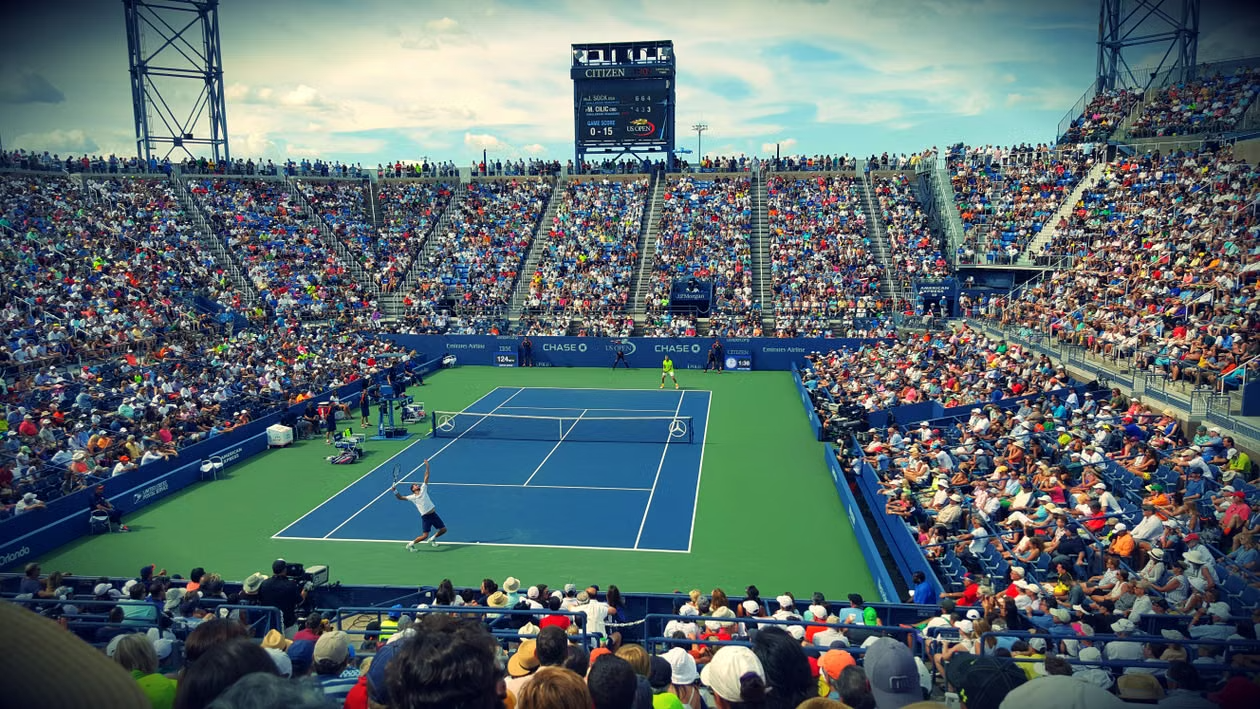
Six salad bowl trophies sit in Spanish cabinets, and the most recent one arrived in Madrid. Every one of those trophies came from a competition that asked far more of its players than the current version does. Older Spanish squads survived five rubbers over three days, often on clay in front of a loud and openly hostile home crowd, and captains had time to repair a bad Friday. Rafael Nadal, David Ferrer and Feliciano Lopez all grew up inside that slow, grinding rhythm, where a team could be two matches down on Saturday morning and still lift the trophy on Sunday night.
Today the maths is leaner. A tie is two singles matches and one doubles, each played as best of three sets. The team that reaches two wins finishes the job, and a live broadcast can wrap up a whole tie in an afternoon. Sports platforms such as x3bet show how that compression changes viewing, because a single doubles rubber can now swing an entire tie and the live scoreboards move with every break of serve.
Why Three Matches Changed the Rhythm of a Tie
The old Davis Cup was a marathon. Four singles and a doubles, spread across Friday, Saturday and Sunday, meant a captain could lose the first day and still plan a comeback. Fatigue, crowd noise and a heavy court surface all became part of the story. A ground that had been watered and slowed on purpose could turn a fast server into an ordinary player by the third day, and home sides planned for exactly that.
The shorter format squeezes that story into a few hours. A team now has one swing of momentum to catch, not three days of them. For a country like Spain, where the tennis calendar is built around clay, the move to neutral arenas also removed much of the traditional home edge.
What the Shorter Format Means for Spain in Numbers
Spain used to lean on depth. A strong number one, a reliable number two and a seasoned doubles pair could spread the load across five matches. With only three, the top of the lineup matters far more, since one upset in singles leaves the doubles team carrying the whole tie.
| Feature | Older home and away ties | Current Finals ties |
| Matches per tie | Five | Three |
| Singles matches | Four | Two |
| Sets per match | Best of five | Best of three |
| Typical duration | Three days | One day |
Count the hours and the gap is plain. A five set singles match could run past five hours, while a best of three match is usually done in under two and a half. A tie that once filled a weekend can now be over before dinner, which is a very different test of nerve and of stamina. The shorter match also favours players who start fast. Falling behind by a set used to leave two or three more to recover in, and now it leaves one, so a slow first ten minutes can cost a country its whole week. Coaches now talk openly about the first three games the way footballers talk about the opening quarter hour.
The doubles rubber becomes the hinge
When the two singles players split their matches, the doubles decides everything. Spain has a long record of strong doubles specialists, and under the old format that pair played on Saturday with a chance to reset the tie. Now the doubles can arrive with the whole tie resting on it, and one tight tiebreak can end a season.
Captains have responded by thinking about the doubles pairing first and the singles order second. Sometimes the second singles player is picked precisely because he partners well with the first. It is a small change in selection logic, but it shows how the shorter format rewrites a captain’s checklist. Fitness reports, practice court chemistry and even left or right handed pairings now count for as much as the singles rankings.
Why a single injury matters more
With five rubbers, a late withdrawal could be absorbed by a replacement who played one match. With three, a missing singles player reshapes the whole plan. A nation that fields one top ten player and one outside the top fifty is exposed to a single bad draw, and Spain has felt that more than once when a leading name skipped the event. The Finals are also played in one host city across a single week, which makes the event feel closer to a tournament than the old rolling calendar. That helps newcomers, since the stakes are readable at a glance. Two wins advance a team, and nothing more needs explaining.
For Spain, the real question is not whether the format is fair but whether its lineup fits it. A side with one elite singles player, a dependable second and a sharp doubles pair has everything the three match format rewards. Anything less, and the tie can disappear in an afternoon, with no Sunday left to repair it. Picture a captain whose first singles player wins in straight sets and whose second loses a deciding set tiebreak. Everything now rests on a pair that may have practised together for only a few days, and the bench has nothing more to offer at all, however deep the squad looked on paper.
