

On January 1, 2026, the 30% Residential Clean Energy Credit vanished. The One Big Beautiful Bill Act ended Section 25D with no phase-down — just a hard cutoff. For a typical $14,000 battery installation, that’s roughly $4,200 in savings that no longer exists. So does the math still work?
It depends on three factors that have all shifted since the credit was created — and they all pull in the same direction.
Battery Prices Have Fallen Faster Than the Credit Disappeared
When Congress passed the Inflation Reduction Act in 2022, residential battery packs were selling at well over $150 per kilowatt-hour at the cell level. According to BloombergNEF’s 2025 battery price survey, lithium-ion pack prices fell to $108/kWh globally, and stationary storage packs — the kind that sit in garages and basements — hit $70/kWh, a 45% single-year drop.
Pack price isn’t what a homeowner pays, of course. The fully installed cost, which includes the inverter, wiring, permitting, and labor, runs between $700 and $1,300 per kWh depending on system size and region, according to EnergySage marketplace data. But even installed costs are trending lower, with industry projections suggesting they could reach $550 to $850/kWh by late 2026.
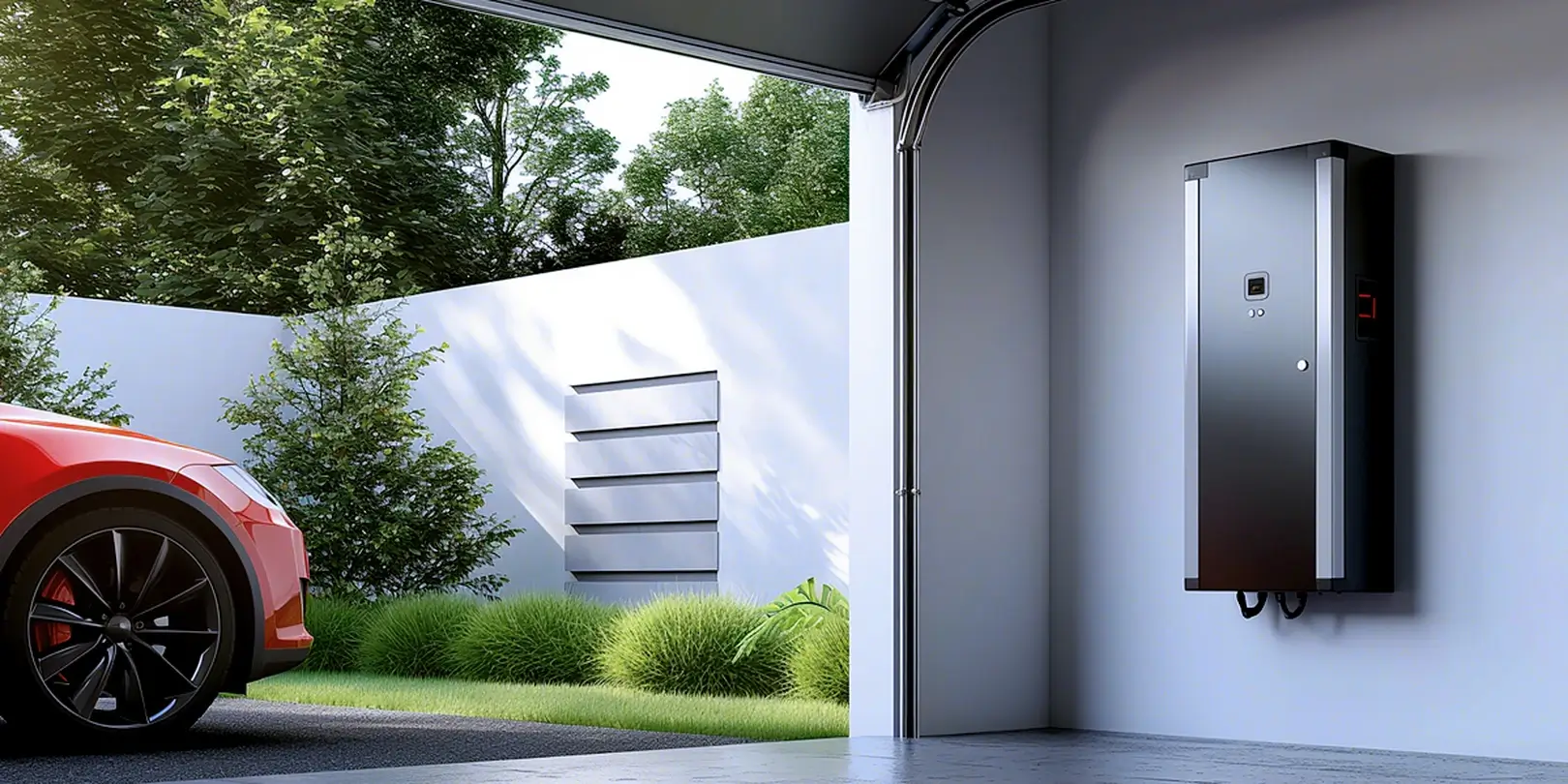
That compression matters. A homeowner buying a 10 kWh system at $850/kWh pays $8,500 today. Three years ago, the same capacity might have cost $12,000 before the credit brought it down to $8,400. The sticker price is arriving at roughly the same out-of-pocket territory the credit once created. Integrated systems that bundle an inverter, battery storage, and energy management into a single unit — like Sigen Energy’s SigenStor — help further by reducing installation labor and component count.
Electricity Bills Are Doing the Opposite
According to the U.S. Energy Information Administration, the average residential electricity price hit 18.05 cents per kWh in March 2026, up from 17.11 cents a year earlier. The EIA reports that residential prices rose over 31% between 2020 and 2025, outpacing general inflation. According to analysis from the American Action Forum using EIA data, nominal residential prices are expected to keep climbing at roughly 4.5% annually through the end of the decade, driven by grid modernization spending, higher natural gas costs, and surging demand from data centers.
For battery owners, rising rates mean every kilowatt-hour shifted from peak to off-peak is worth more than it was last year. In states with time-of-use pricing — where evening electricity can cost two to three times the off-peak rate — a well-sized home battery storage system can meaningfully reduce monthly bills through rate arbitrage, the practice of charging when power is cheap and discharging when it’s expensive.
Meanwhile, grid reliability is heading the wrong direction. According to the EIA, American electricity customers averaged 11 hours of power outages in 2024, nearly double the prior decade’s average. A July 2025 Department of Energy report warned that without major investment, most U.S. regions will face unacceptable reliability risks within five years. Backup power has real value in that context — even if it doesn’t fit neatly on a spreadsheet.
The Incentive Picture Isn’t Completely Blank
The federal credit is gone for direct buyers, but it hasn’t left a total vacuum. California’s Self-Generation Incentive Program still offers rebates covering 15% to 100% of installation costs depending on income and fire-risk eligibility, according to the CPUC. Connecticut’s Energy Storage Solutions program provides up to $16,000 per residential installation. Massachusetts, Vermont, and Colorado run their own programs. And the Section 48E commercial investment tax credit remains available through 2032 for systems owned by third parties under a lease or PPA.
Virtual power plant programs are emerging too. ConnectedSolutions in New England, for instance, pays $225 to $275 per kilowatt of enrolled capacity annually — enough to offset a meaningful share of system cost over five years.
The Bottom Line
Nobody should pretend losing a 30% credit doesn’t sting. But the question isn’t whether batteries are cheaper than they were with the incentive — it’s whether they make sense in a 2026 where electricity costs more, outages last longer, and the equipment itself keeps getting cheaper. For homeowners in high-rate states, storm-prone regions, or areas with active state programs, the answer is increasingly yes. For those on flat, low-cost power with rare outages, the payback window stretches further.
The decision comes down to a household’s specific rate structure, grid exposure, and available incentives. For anyone running the numbers, it’s worth modeling all three — especially what happens when the next rate increase arrives.
